Posted on Leave a comment

Be Courageous During Adversity!

Courage Dearheart

There’s a word we don’t hear often enough: fortitude. The strength that enables a person to face danger or endure pain and adversity with courage. It’s a trait that anchors us when life gets rough. The word comes from the Latin fortis, meaning “strong,” and it’s closely related to “fortify”—to strengthen, secure, reinforce, whether in body, mind, or spirit.

This kind of courage plays out vividly in The Voyage of the Dawn Treader by C.S. Lewis. In one of the story’s darkest moments, Lucy and the others are surrounded by a deep, unrelenting darkness. Despite being warned of this stretch of the journey, the reality of it is far more demoralizing than they imagined. Fear and discouragement set in. Lucy cries, “Aslan, if you ever loved us, send help now.” And help comes—not by removing the darkness, but by entering it. Aslan appears as an albatross and whispers to Lucy, “Courage, dear heart.” The darkness didn’t disappear, but her heart grew steadier.

We all face dark seasons when the weight of grief, hardship, or uncertainty presses in from all sides. Jesus didn’t shy away from warning us about this reality. In John 16:33, He says, “Here on earth you will have many trials and sorrows. But take heart, I have overcome the world.” Take heart. Be of good courage. Why? Because He is with us.

That promise echoes throughout Scripture:

  • “Be strong and courageous… the Lord your God is with you wherever you go.” (Joshua 1:9)

  • “Even though I walk through the valley of the shadow of death, I will fear no evil, for you are with me.” (Psalm 23:4)

  • “When they call on me, I will answer; I will be with them in trouble. I will rescue and honor them.” (Psalm 91:15)

God doesn’t always take us out of the valley, but always walks us through it. He is not distant or indifferent to our suffering. He is Emmanuel—God with us.

It’s also important to remember that these hard seasons don’t last forever. 1 Peter 1:6-7 reminds us that even though we may suffer “for a little while,” suffering refines our faith like fire purifies gold. Psalm 30:5 offers this hope: “Weeping may endure for a night, but joy comes in the morning.” And 1 Peter 5:10-11 assures us that “after you have suffered a little while, He will restore, support, and strengthen you.”

Even the heroes of faith weren’t strangers to pain. Hebrews 11, often called the Hall of Faith, lists men and women who walked through difficulty, doubt, and fear. In Judges 6, Gideon cries out, “If the Lord is with us, why has all this happened to us?” God doesn’t rebuke him. Instead, He says, “Go in the strength you have.”

That’s often how courage looks—not like the absence of fear, but like moving forward in spite of it.

A wise pastor once said, “It’s always darkest before the dawn. The enemy fights hardest before the breakthrough.” Hold onto that. When the night feels endless, remember Aslan’s words: “Courage, dear heart.” You’re not alone. The light is coming.

Let’s pray:

Lord, give us strength when we feel weak. Give us peace in our storms. Remind us of Your presence when we feel alone. Help us walk through dark seasons with faith, knowing that You are with us and the dawn will come. Amen.

Posted on Leave a comment

Why the Church Still Matters

Why the Church Still Matters: A Biblical, Historical, and Cultural Perspective

In an age when headlines often highlight scandals and failures within the church, and when many individuals carry wounds from painful experiences in church communities, it’s natural to ask: Is the church still relevant? If we can love Jesus and live moral lives, isn’t that enough? Do we really need the church anymore?

These are honest questions—and they deserve honest answers. To understand the importance of the church, we must look beyond the noise and hurt, diving deep into Scripture, history, and culture to rediscover why the church remains essential today.

The Church: God’s Idea from the Beginning

The concept of the church wasn’t dreamed up by humans—it was initiated by God Himself. Jesus was the first to publicly affirm its importance, stating in Matthew 16:18, “I will build my church, and the gates of Hades will not overcome it.” That statement is powerful. The church is not a man-made institution—it’s a divine one, built by Christ and belonging to Him.

Further, the value of the church is reflected in the ultimate price Jesus paid for it. In Acts 20:28, Paul reminds church leaders that Christ “bought the church with His own blood.” That kind of sacrificial love underscores just how deeply God values the church.

Not only was the church founded by Christ, but He is also its foundation. 1 Corinthians 3:11 makes this clear: “For no one can lay any foundation other than the one already laid, which is Jesus Christ.” The strength and endurance of the church rest on the unshakable cornerstone of Christ Himself.

Why We Still Need the Church

In a society that often champions individualism, it can be easy to believe that faith is best practiced privately. But Scripture consistently shows us that the Christian life was never meant to be lived in isolation. The church plays a vital role in both our spiritual growth and in upholding God’s truth in the world.

1 Timothy 3:15 calls the church “the pillar and foundation of the truth.” In other words, the church is a guardian of sound doctrine and biblical wisdom. It’s within the context of a faithful community that truth is taught, defended, and lived out.

Additionally, the church is a space where believers are meant to build one another up. In Colossians 3:16, Paul encourages the church to “let the message of Christ dwell among you richly… teaching and admonishing one another with all wisdom.” Encouragement and correction aren’t just benefits of church community—they’re necessities for spiritual maturity.

And let’s not overlook the power of mentorship. In Titus 2:1-6, Paul outlines a model where older believers guide younger ones, passing on wisdom, accountability, and godly example. The church fosters multi-generational relationships that help us grow in grace and wisdom.

A Living Witness to the World

Beyond personal growth, the church is meant to be a visible expression of God’s kingdom on earth. Through worship, service, and love, the church bears witness to the power and presence of Christ in a broken world. It’s not perfect—because it’s made up of imperfect people—but it is still God’s chosen instrument to demonstrate His love and truth.

Yes, the church has its flaws. Yes, there have been failures. But abandoning the church because of its imperfections is like giving up on family because of disagreements. The answer is not withdrawal, but restoration and at times, healthy realignment and recommitment.

Final Thoughts

The church is not a relic of the past—it is a vital part of God’s plan for today and the future. Rooted in Scripture, shaped by history, and needed now more than ever, the church is where believers grow, serve, and reflect the beauty of Christ to the world.

So, can we serve Jesus on our own? Maybe. Does that mean we should? Absolutely not.

According to the Bible—and the witness of countless generations before us—it’s within the church that we flourish. And it’s through the church that God reveals His glory.

Posted on Leave a comment

When God’s Plan Doesn’t Make Sense


Have you ever looked at your life and thought, This doesn’t make sense? Maybe things aren’t going the way you expected, or you’re wondering why God seems to be taking you in a direction you didn’t plan.

Sometimes, we expect God’s plan to be clear and straightforward, but that’s not always the case. The good news? We don’t have to figure everything out. God sees the bigger picture, and we’re part of His story—not just our own. Here are four things to remember when life feels confusing.

1. God Knows What He’s Doing

It’s easy to assume we should understand everything happening in our lives. But God’s ways are much higher than ours. Isaiah 55:8-9 says:

“For my thoughts are not your thoughts,

neither are your ways my ways,” declares the Lord.

“As the heavens are higher than the earth,

so are my ways higher than your ways

and my thoughts than your thoughts.”

Simply put: God’s perspective is much bigger than ours. What feels like a setback or a detour might actually be part of His perfect plan.

2. Trust That God is Good

When life is uncertain, we have two choices—stress about what we don’t know or trust in who God is. Psalm 131:2 gives us a picture of calm trust:

“But I have calmed and quieted myself,

I am like a weaned child with its mother;

like a weaned child I am content.”

A child rests in their parent’s care because they know they’re safe. In the same way, we can choose to rest in God’s goodness, even when we don’t have all the answers.

3. God is Always Working

Even when we don’t see it, God is working things out for good. Romans 8:28 reminds us:

“And we know that in all things God works for the good of those who love him, who have been called according to his purpose.”

Joseph’s story in Genesis 50:20 is a perfect example. He went through betrayal, slavery, and prison, but later told his brothers:

“As for you, you meant evil against me, but God meant it for good.”

What seemed like a disaster was actually part of God’s bigger plan. The same is true for us.

4. Keep Going—Don’t Give Up

When life is tough, it’s tempting to stop believing, stop praying, or stop trying. But the Bible encourages us to keep going. Psalm 126:5-6 says:

“Those who sow in tears shall reap with shouts of joy!”

Even when we don’t see immediate results, every small act of faithfulness matters. Keep planting seeds—keep trusting, keep praying, keep moving forward. God is working behind the scenes.

Final Thoughts

Life won’t always make sense, but that’s okay. We don’t have to understand everything to trust that God does and that He has our best interests in mind. His plan is bigger than ours, and He’s guiding us even when the path isn’t clear.

So, when you’re feeling uncertain, remember: God is in control, He is good, and He is working for your good. Keep trusting, and keep going—you’re not alone in this!

Posted on Leave a comment

Enlarging Our Capacity to Receive God’s Blessings

Have you ever considered that God has blessings prepared for you—gifts, opportunities, and breakthroughs—that you may never receive? That might be a shocking thought. It may even feel discouraging. But what if the issue isn’t that God is withholding something from you, but that your capacity to receive isn’t large enough? The truth is, God desires to pour out His goodness in our lives, but we must be prepared to receive it.

Prepare for What’s Coming

In Isaiah 54, God speaks to people who are discouraged and feel like they lack what they need. Instead of telling them to wait passively, He instructs them to prepare for His blessings:

“Enlarge the place of your tent, stretch your tent curtains wide, do not hold back; lengthen your cords, strengthen your stakes. For you will spread out to the right and to the left; your descendants will dispossess nations and settle in their desolate cities.” — Isaiah 54:2-3 (NIV)

This passage is a powerful reminder that when we go through difficult seasons, we often shrink our expectations. Disappointment, shame, and fear of the future can limit our vision. In ancient Israel, barrenness was considered a disgrace, leaving a person without hope of legacy or inheritance. But God spoke to His people in the midst of their discouragement and told them to expand—to prepare for growth before they even saw the results.

Gideon had a similar experience. He was hiding in a winepress, trying to protect a small harvest from being stolen, when God called him a “mighty warrior” (Judges 6:11-12). Gideon saw himself as weak, but God saw what he could become. God is never limited by our circumstances—He wants to bless us beyond what we think is possible!

Faith Determines Capacity

God’s Word makes it clear that He has good plans for us:

“‘For I know the plans I have for you,’ declares the Lord, ‘plans to prosper you and not to harm you, plans to give you hope and a future.’” — Jeremiah 29:11

“Every good and perfect gift is from above, coming down from the Father of the heavenly lights.” — James 1:17

However, while God is always willing to bless, our faith determines our capacity to receive. The Israelites who scouted the Promised Land had a choice: believe in God’s ability to bring them victory or focus on the obstacles. Ten spies saw giants and declared defeat, while Caleb, who had a different spirit, believed in God’s promise (Numbers 13:1-3, 25-28). Later, the New Testament confirms that their unbelief limited what God could do for them (Hebrews 3:9).

Growing Our Faith to Receive More

If we want to increase our capacity to receive, we must grow our faith! Consider the example of the centurion who came to Jesus for healing:

“Then Jesus said to the centurion, ‘Go! Let it be done just as you believed it would.’” — Matthew 8:13

Our faith determines the measure of what we receive. The Bible tells us that faith comes and grows by hearing the Word of God:

“Faith comes by hearing, and hearing by the Word of God.” — Romans 10:17

One of the most practical ways to grow in faith is through intentional meditation on Scripture:

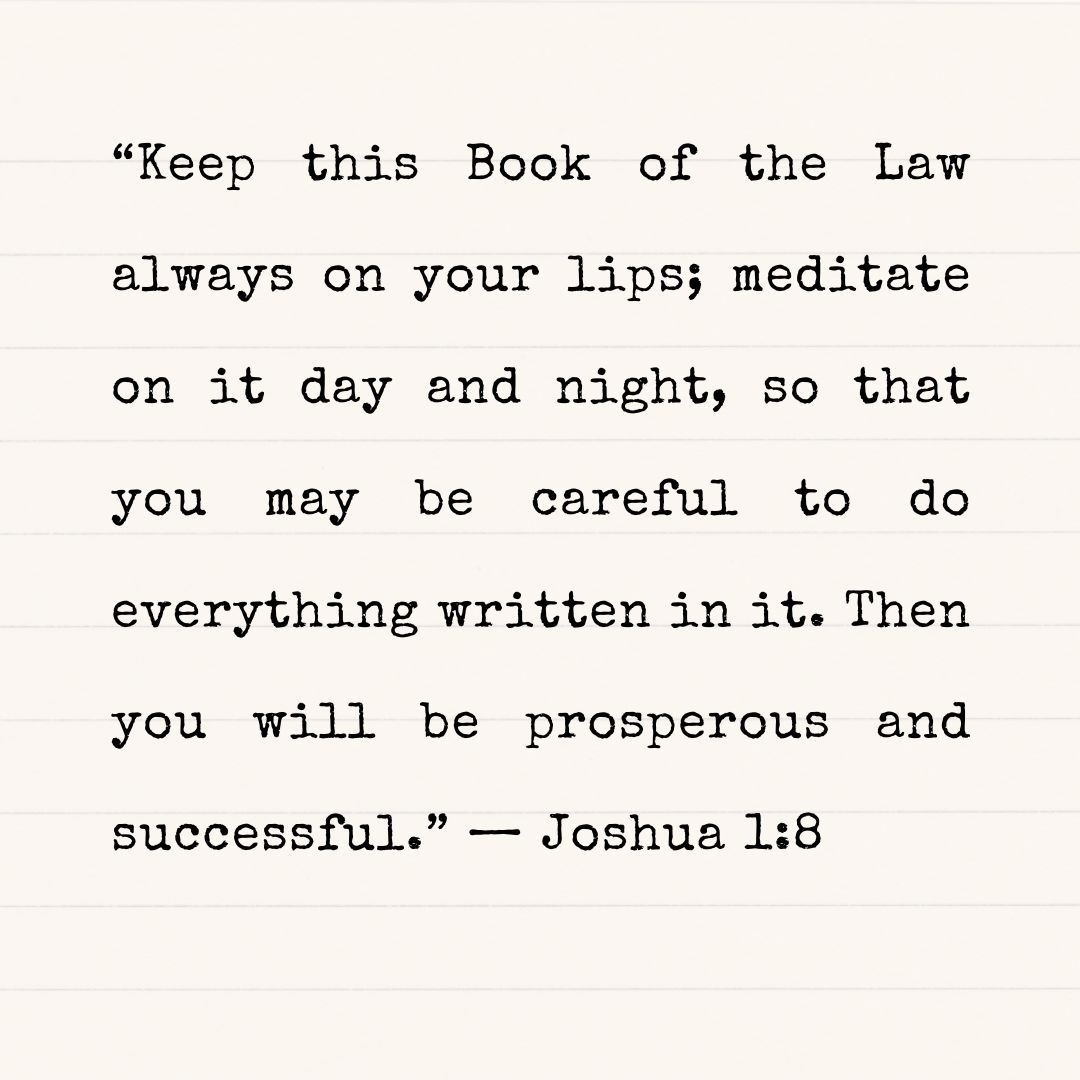
“Keep this Book of the Law always on your lips; meditate on it day and night, so that you may be careful to do everything written in it. Then you will be prosperous and successful.” — Joshua 1:8

Taking Action

So how do we apply this in our lives? We build our faith by studying, praying, and speaking Scriptures relevant to our situation. When we fill our hearts and minds with God’s Word, we expand our capacity to receive what He wants to give us.

This week, let’s take intentional steps to do just that. Find scriptures that speak to your needs, meditate on them, and declare them in faith. God is ready to bless you—are you prepared to receive?

Posted on Leave a comment

Binding and Loosening Rediscovered

Binding & Loosing – rediscovering an important aspect of walking in Victory. 

“I will give you the keys of the kingdom of heaven, and whatever you bind on earth shall have been bound in heaven, and whatever you loose on earth shall have been loosed in heaven.” Matthew 16:19 NASB“Truly I say to you, whatever you bind on earth shall have been bound in heaven, and whatever you loose on earth shall have been loosed in heaven.” Matthew 18:18 NASB

What is “Binding & Loosing”?
The Encyclopaedia Biblica (public domain) says, “Binding and loosing is originally a Jewish phrase appearing in the New Testament, as well as in the Targum. In usage, to bind and to loose means to forbid by an indisputable authority and to permit by an indisputable authority.”

One result of the death, burial, and resurrection of Jesus Christ is the authority given to Christians. It is often called the “authority of the believer.” Simply put, when a person (any person) receives Jesus as Lord of their lives, they carry authority. This authority comes from God. It is born out of a person’s submission to Jesus Christ.

What good is the authority if you do not use it?
An illustration is important at this point. Say that a police officer sees a problem with a stoplight of an intersection. Chaos is resulting because the traffic light is broken. The police officer has the authority to do something. People would be justifiably upset with the officer if no action is taken.

Why are the people justified in being upset with the officer? The answer is because the officer is not using the delegated authority to help the situation. The authority is only useful if it is invoked.

When we bind and loose, we are releasing heaven upon the earth.
We release God’s Will (not ours) upon the earth. When we see anything that is not aligned with God’s Will on the earth, we are to “take authority” over it in the name of Jesus Christ. This would include sin, sickness, and satan (I purposely do not capitalize his name).

Here is a link to a scholarly article by Dr. Paul King that gives a history and theological foundation for this fundamental doctrine. I encourage you to read it. 

Are you ready to bind and loose?
Include “binding and loosing” in your prayer time. Even as you go throughout your day, bind sin, sickness, and satan in the name of Jesus Christ. Also, loose righteousness, healing, and angels upon the earth.

Let’s bring heaven to the earth.

Posted on Leave a comment

Authority to Heal Book Review

Bibliography

Blue, Ken. Authority to Heal. Downers Grove, Ill: InterVarsity Press, 1987.

Author Information

Dr. Ken Blue is the founder of Good News to the Poor, an organization that seeks to take the grace message and charismatic ministry to “the poor” in social-economic and spiritually poor places worldwide. He served as a missionary to Communist East Europe, where he was imprisoned, presumably for preaching the Gospel. He and his wife have started churches in Canada and the U.S. He does consulting work for businesses using Biblical principles of leadership. He also was a five-time All-American swimmer and selected to be part of the 1968 U.S. Olympic Training Team.

Blue earned a Doctorate of Ministry in Theology from Fuller Theological Seminary, a Masters degree in Christian Studies at Regent College, and a B.A. in Communications from Cal State Hayward. He has authored and co-authored others books, including Healing the Wounded and Healing Spiritual Abuse. Additionally, he developed training courses for businesses.

Content Summary

Authority to Heal seeks to provide answers to questions concerning divine healing and establish a Biblical model for ministering to the sick. The book is divided into three sections (1) Clearing the Ground of Theological Hindrances, (2) The Kingdom of God and the Fight to Heal, and (3) Beginning a Healing Ministry. Each of the three sections has distinct purposes.

The first section, “Clearing the Ground of Theological Hindrances,” seeks to remove the “weeds before planting the seeds.” By this, Blue addresses errors that hinder the divine healing ministry. There are four particular “weeds” Blue addresses. The first is “sanctification through sickness,” which believes that sickness increases sanctification in a person. The second is “Divine Determinism,” the belief that God causes all things, including sickness. The third is the “Faith Formula,” which says that faith is a strict causality of all healing and can be used as a technique to manipulate the power of God. The fourth is “The Secular World View,” which deals with the secular worldview that denies the supernatural, miraculous healing.

The second section, “The Kingdom of God and the Fight to Heal,” presents the theological foundation for divine healing. Blue establishes five significant issues surrounding the doctrine of divine healing. The first issue examined that supports divine healing is that God loves people and desires to heal their sickness in all areas, spiritual, psychological, and physical. The second issue for divine healing is that healing is a manifestation of the Kingdom of God overcoming the kingdom of Satan. The third issue concerning divine healing is that it is a fight and must be viewed as such. The fourth issue of divine healing is the importance of faith, not as the only cause-and-effect of divine healing. Still, that faith is significant and even determinative in some of the Gospel narratives. The fifth issue of divine healing is that Christians can expect to receive manifestations in the present and the future. He uses the “now and not yet” terminology.

The third section of the book, “Beginning a Healing Ministry,” establishes a Biblical model for ministering to the sick. Blue gives four considerations when beginning a healing ministry. The first consideration is understanding many models are effective when ministering to the sick. He next presents five steps in his ministry model. These steps are (1) interviewing, (2) choosing a prayer strategy, (3) praying for specific results, (4) assessing the results, and (5) giving post prayer direction. The next consideration in developing a healing ministry is to address the whole person: spirit, soul, and body (I Thess. 5:23). Finally, he presents the notion that Christians must obey the command to heal the sick and walk in authority.

Evaluation

The uniqueness of this book is its presupposition that God intervenes on behalf of sick people with healing. Yet, this presumption is not in the vein of many contemporary “word of faith” preachers. Blue even allows for mystery and a “now and not yet” version of attainment of healing.

Blue tackles the issue of the sovereignty of God with an outstanding balance in his use of the Bible and logic. He brings out some crucial points of the pastoral problems with the teaching that everything that happens, including sickness and death, is de facto God’s direct activity. He reveals that many situations are not a result of God’s Will but man’s choices. He even points to scriptures from Apostles Paul and Peter that indicate God’s Will for all to be saved, yet most will not (1 Tim. 2:4 and 2 Peter 3:9 respectively). Yet, he does not in any way take away from the fact that God is sovereign. The book does not glibly approach the subject with simple answers to difficult situations. Blue even points out that God’s sovereignty does not cause sickness, but He does work within sickness.

Blue bravely tackles the sticky issue of faith when it comes to being healed of sickness. He cleverly calls out particular faith preachers within his discussions of faith without actually mentioning their names but does give titles of their messages. This reviewer laughed when one particular title was mentioned associated with a particular hero of the faith. Yet in Blue’s correction, he does give the most “faith preachers” the designation of being closer to the truth than others. While he says that a “faith formula” is not appropriate, he emphatically teaches that faith is vital when receiving healing. As stated before, Blue says that the Gospel narratives even point out that faith is often determinative.

Blue effectively points out that although healing is God’s Will, it is also part of a fight. He says that this fight results from God sovereignly giving freedom of choice and therefore allowing for its consequences. Man’s freedom resulted in sin, which allowed for sickness. So God works within the framework He set up to undo the results of sin. As it relates to healing, Jesus’ death and resurrection defeated Satan. The book makes a point that the crucifixion determined the result, but the war still continues.  This is compared to human wars where the fighting continued after the result had been resolved, as in D-day. Although Satan is stripped of his authority, temporarily, he still has an ability that will be stripped from him at the end of this age.

This book lays out the theological issue of obedience concerning the healing ministry. Very few Christians would look at the healing ministry as a point of obeying God. Blue poignantly presents the reality that many churches believe in healing yet do not practice a healing ministry. He tells a moving story of a young single mother who prays for the sick as a response to what Jesus Christ has done in her life.

A strength of the book is its commitment to giving more weight to Scriptural truths than to personal experiences. “When we want to understand God’s will, we should not try to deduce it from the circumstances of a fallen world. Neither should we form an abstract concept of God’s will from a non-biblical notion of divine sovereignty. Rather, we should look at Jesus, who is the explicit declaration of God’s will.” (Ken Blue. Authority to Heal (Kindle Locations 308-310). Another strength is Blue’s ability to point out the mystery surrounding healing. No one has all the answers, and no guilt should be put upon a person who deals with sickness. Arguably the greatest strength of the book is the five-step model of a healing ministry. Blue gives a willing participant the framework to begin a healing ministry.

The only weakness this reviewer sees is that there could be a more emphatic presentation of the alternative positions of his presuppositions. Calvinists are sure to have emphatic rebuttals. Blue’s bias is unashamedly presented. It does also seem that some of the points are underdeveloped.

Authority to Heal should be required reading for all who want to participate in the healing ministry. This book teaches a proper and balanced doctrine on the theology and practice of divine healing. More books need to approach the subject of divine healing like this one. Dr. Blue’s book presents divine healing as an effective evangelism tool that can be used to reach a spiritually hurting world.