Posted on Leave a comment

Take Your Medicine: Covid-19, God’s Word, and Healing

Image: https://www.thetorah.com/blogs/coronavirus-what-we-can-learn-from-the-bible-and-the-ane

Follow The …

To stay healthy during the COVID-19 pandemic, we have been told to “follow the science” and take what is affectionately called the “jab” (a term that refers to the COVID-19 vaccine.) We, a society of individuals, debate the vaccine’s necessity, its effectiveness, and its long-term ramifications. There is so much information and counter-information many are understandably confused. To vax or not vax should be a decision made by the individual.

To stay healthy and receive divine healing, we should follow the Scriptures. Like the debate surrounding the vaccine, there is much debate over divine healing and health. This post assumes the belief that divine healing is in the atonement of Jesus and therefore is available to everyone through faith in Him. There is certainly some mystery about divine healing, the Bible is clear that divine has happened in the past. Additionally, there is enough verifiable evidence of the occurrence of divine healing still happening today. This leads to a question as to how one receives divine healing. Does the Bible give us a “prescription” as to how one might consistently receive healing and stay in divine health?

(NOTE: Some readers may want to skip to the “How Do We Take God’s Word As Medicine?” further down in the post.)

Take God’s Word As You Would Take Your Medicine

To answer that question, this post turns to Proverbs 4:20-22. It says, “My son, give attention to my words; Incline your ear to my sayings. Do not let them depart from your sight; Keep them in the midst of your heart. For they are life to those who find them And health to all their body.” This passage is saying that intentionally hearing God’s Word is medicine to the physical body. To help us examine this passage, we look to Knut Heim’s, Poetic Imagination in Proverbs: Variant Repetitions and the Nature of Poetry points out that even though there are attempts to smooth over “my words” to read “understanding,” it is an error. He believes the text is more focused on “turning one’s ear to actual sounds, such as those produced by spoken words.[1]” Jeff Levin and Keith Meador point out using the Torah for physical healing was practiced by the Jews in their book, “Healing to All Their Flesh.[2]” In the book, they write about Rabbi Joshua ben Levi, who is credited as having taught about the healing power of the Torah. He said,

If he feels pains in his head, let him engage in the study of the Torah, since it is said: ‘For they shall be a chaplet of grace unto your head…’ If he feels pains in his throat, let him engage in the study of the Torah, since it is said: ‘… and chains about your neck.’ If he feels pains in his bowels, let him engage in the study of the Torah, since it is said: ‘It shall be a healing to your navel…’ (Proverbs 3:8). If he feels pain in his bones, let him engage in the study of the Torah, since it is said: ‘… and marrow to your bones…’. If he feels pain in all his body, let him engage in the study of the Torah, since it is said: ‘… and healing to all his flesh.’[3]

Levin and Meador propose more research between the Torah and healing is needed. They said that this tradition of prescribing readings of the Torah and receiving healing is an established practice with the Jewish people. The point here is that there seems to be a connection to hearing the Word of God and receiving divine healing.

What type of healing is spoken in this passage? We note that the LXX uses the Greek word ἴασις, which is translated as “health[4].” The BDAG further explains that this word’s range is “restoration to health after a physical malady, deliverance from a variety of ills or conditions that lie beyond physical maladies, cure, deliverance.[5]” Therefore, it would be a mistake to force this “healing” to refer to spiritual or mental healing, although those certainly are included. Physical healing is the immediate context of this verse. This verse is teaching us that as we pay attention to the Word of God with our ears, mind, and mouth it helps our flesh stay healthy and heal from disease.

Hearing God’s Word Helps Us Connect To Divine Healing

The connection of hearing God’s Word and receiving divine healing is supported in Romans 10:16-17, “However, they did not all heed the good news; for Isaiah says, ‘LORD, WHO HAS BELIEVED OUR REPORT?’ So faith [comes] from hearing, and hearing by the word of Christ.” Paul Achtemeier’s “Romans. Interpretation, a Bible Commentary for Teaching and Preaching” is one of the guides for this pericope. He states that one of the most significant importance of these verses is the focus on hearing[6]. He writes, “But even had the New Testament been available so that people could have read it, that would not have served as a substitute for the apostolic preaching.[7]” Even though Paul wrote letters that would eventually become part of the NT, he believed that his physical presence and preaching would be far superior to the letters, see Romans 1:9-13. Achtemeier thinks that Paul is saying that hearers bear a burden to listen, and preachers bear an obligation to preach[8]. “One’s relationship with God may depend on how carefully one listens and understands what is being said! Therefore, our passage implies a warning against careless hearing since hearing is the key to trust in God.[9]” Paul put much emphasis on preaching’s role in igniting faith in the hearer. He says that one can respond to God appropriately in the preaching and hearing of God’s Word[10]. This pericope supports the point of this post that hearing God’s Word assists in receiving divine healing. The development of faith in Jesus and His atoning work is an essential connection in the transmission of divine healing.

Textual criticism of this verse is necessary. There are a couple of variations in translation. Some variants are translated as “word of God” or “word of Christ.” Richard Longenecker’s commentary, “The Epistle to the Romans: a Commentary on the Greek Text,” provides some help in this area. He believes the evidence supports the “word of Christ” is original, replaced by a more acceptable “word of God.”[11] He also notes the connection of this verse to Isaiah 53. It is his opinion that Paul’s inclusion of Isaiah establishes the relationship between faith and preaching[12]. Is it a coincidence that the chapter establishing healing in the atonement (Isaiah 53) is used in tandem with the pericope setting preaching’s role in developing faith (Romans 10:16-17)? Is this Providence for this thesis? God knows.

How Do We Take God’s Word As Medicine?

Here are three suggestions for taking the Word of God to receive divine healing:

  1. Study, not just read, the Bible paying close attention to passages that directly deal with healing. Start by studying these passages:
    • Isaiah 53:1-5 – these verses connect healing to the atonement of Jesus.
    • Matthew 4:23 & 9:35 – these verses connect healing to the ministry of Jesus.
    • James 5:14-15 – these verses connect healing to the practice of the Church.
  2. Intentionally and intently listen to Bible-based Christ-centric sermons about healing. Look for healing services that have sermons preached as well as prayer and ministry of healing.
  3. Develop a list of Scriptures concerning healing that mean something to you. Read them aloud daily. You might want to search for Scriptures that would connect to the specific issue you are dealing with. For example, if you are having ankle or feet issues, you might look at the Acts 3:6-8 passage concerning the healing of a man’s feet and ankles at the gate Beautiful.

It Has Helped Me Receive Divine Healing

I have done these steps several times to receive healing. Once I injured my knee during while training for a marathon. The injury would require minor surgery to repair it. If I wanted to have the surgery, I would have, but I was at a place that I knew God wanted to heal it another way. Every day for a few weeks, I would speak the Acts 3:6-8 scripture over my legs. I know this sounds strange, but I would speak the verses to the knee like I would be talking to someone. After a couple of weeks, my knee was completely healed. That was over four years ago.

Please note that the healing of my knee was not immediate, and I was diligent in applying the Word of God to my knee daily. To some, they want prayer and an instant miracle. Praise God for instant miracles because of a simple prayer. Those types of healing miracles do happen. Be aware that, in the ministry of Jesus, the “multitudes” were healed in and around preaching sessions of Jesus (see Matthew 4:23 & 9:35). These people had taken large amounts of Jesus’ teaching and preaching. They were ready to receive healing.

One Significant Way To Recieve Divine Healing

God is a healing God. There are many ways for us to receive healing. Spending time studying and listening to the Word of God concerning healing is one of the significant ways we can consistently receive divine healing and walk in divine health.

Footnotes:

[1] Knut Martin Heim, “Poetic Imagination in Proverbs: Variant Repetitions and the Nature of Poetry”, Pennsylvania State University Press, 2012. ProQuest Ebook Central, http://ebookcentral.proquest.com/lib/oru-ebooks/detail.action?docID=3155671, 83.

[2] Jeff Levin, and Keith Meador, “Healing to All Their Flesh: Jewish and Christian Perspectives on Spirituality, Theology, and Health,” West Conshohocken, Pa: Templeton Press, 2012, 107.

[3] Levin and Meador, 107.

[4] “G2392 – iasis – Strong’s Greek Lexicon (NASB).” Blue Letter Bible. Accessed 20 Sep 2020. https://www.blueletterbible.org//lang/lexicon/lexicon.cfm?Strongs=G2392&t=NASB.

[5] Walter Bauer and Frederick W. Danker, “ἴασις,” in A Greek-English Lexicon of the New Testament and Other Early Christian Literature (Chicago, Il: Univ. of Chicago Press, 2000), 465.

[6] Paul J. Achtemeier, “Interpretation, a Bible Commentary for Teaching and Preaching,” Atlanta: Westminster John Knox Press, 1985. https://search-ebscohost-com.oralroberts.idm.oclc.org/login.aspx?direct=true&db=nlebk&AN=41343&site=eds-live&scope=site, 173.

[7] Achtemeier, 173.

[8] Achtemeier, 174.

[9] Achtemeier, 175.

[10] Achtemeier, 176.

[11] Richard Longenecker, The Epistle to the Romans: a Commentary on the Greek Text, Grand Rapids: William B. Eerdmans Publishing Company, 2016, 792.

[12] Longenecker, 855.

Posted on Leave a comment

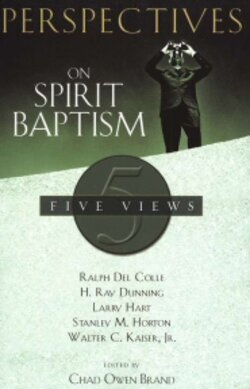
Spirit Baptism 5 Views Book Review

Brand, Chad Owen ed. “Perspectives on Spirit Baptism: Five Views.” Nashville, TN: Broadman & Holman, 2004. ISBN-13:97808542594

The colloquial statement, “The devil is in the details,” ironically applies to Spirit baptism. In general, the idea of Spirit baptism is agreed upon by Reformed, Pentecostal, Charismatic, Wesleyan, and Catholic faith traditions. It is in the details that these faith traditions have different points of view. The following is a reflection on Chad Brand’s book on these five faith traditions views of Spirit baptism and answering eight specific questions. This reflection closes with the authors’ views of Spirit baptism.

What is the essence of Spirit Baptism?

Stanley Horton states the nature of Spirit baptism as the first sentence of his perspective. He writes that Pentecostals have viewed “Spirit baptism ‘as the coming of God’s Spirit into a believer’s life in a very focused way.'” (50). He views Spirit baptism as an outwardly perceptible and inwardly personal experience. (51) His view is undoubtedly seen faithfully through Scripture, yet he vividly paints Spirit baptism with colors of experiential stories and anecdotes. He bids the reader not to reject the Pentecostal view because it speaks of experience. He recounts the beginnings of Classical Pentecostalism as being sourced with a study of Scripture and fervent prayer that resulted in an experience. (52) He points out that Spirit baptism produces a zeal for evangelism, empowerment for miracles, a desire for holiness, and a hunger for the Scriptures, along with the opening of the mind to understand what the Scriptures say.

Pentecostal For the Most Part

            Horton and I agree. Before reading this book, I would have thought that I was more Charismatic and less Pentecostal. From the perspectives presented in this book, I found that I am almost straight down the line Pentecostal. The idea of Spirit baptism being a subsequent act of the Holy Spirit in a person’s life that speaking in tongues is the initial evidence (with one variation), and its purpose in evangelism are all fundamental to me.

The idea of the subsequence is what separates most of the views of this book. The Pentecostal belief that Spirit baptism is a subsequent act of the Holy Spirit resonates with me but theologically and experientially. From a theological point of view, the “Pentecost” in John 20 and the Pentecost in Acts 2 help sum Spirit baptism as a subsequent act. John was present when both scenes took place. For them to be varied, descriptions of the same event would require a very extensive imagination. The details surrounding these events show them to be two separate events. Jesus breathed on them in John 20:22. This was more than for showmanship or theatrics. The Resurrected Savior would not have time to play games. This, from my point of view, was a real occurrence, and there was a genuine receiving of the Holy Spirit that created a new birth in those disciples. Simply put, the disciples were born again in John 20:22 and empowered in Acts 2. I believe I was genuinely saved months before receiving Spirit baptism. My experience with God was a produced fruit in my life. The moment I received Spirit baptism was just as real and very separate from the conversion experience. Hart, I suppose, would call both of those experiences Spirit baptisms. My terminology would more closely align with Jesus’ words about a description of what happened when He said, “. . . you will be baptized with the Holy Spirit not many days from now.” If Spirit baptism is a coverall term, then I would imagine He would have added the word “again.”

The second major reason for aligning with Horton is his view on initial evidence of Spirit Baptism. Horton’s first point about the fact that the upper room disciples were not psychologically conditioned is well put. (68) That was how I experienced Spirit baptism. I had never heard of speaking in tongues when I was prayed with for the experience. When it happened, I was a little concerned the people around me thought I was out of my mind. I did not realize that is what they expected. Biblically, there are five accounts of Spirit baptisms in Acts. Three of the five accounts explicitly state that those involved spoke in tongues. Two of the five, Acts 9:17 (Apostle Paul) and Acts 8:17-18 (Simon saw something), strongly suggest tongues were possible.

The third major reason for aligning with Horton concerns the importance of Spirit baptism. Acts 1:8 reveals very sobering words concerning Spirit baptism. The upper room disciples needed the power to witness. This delay in the mission shows its importance. All that was necessary for the Gospel to be preached was in order, but Jesus knew they needed help to preach the Gospel. They were to wait for Spirit baptism to preach the Gospel adequately. The wait defines the weight of Spirit baptism.

These various authors of this book have dealt with this needlessly controversial subject in a very respectful manner. Each passionately presented their view while not belittling the others. This book on Spirit baptism has taken “the devil” out of our discussion on Spirit baptism and made it a little more holy.

Posted on Leave a comment

First Running Post

I am a Christian. I am a husband. I am a father. I am a pastor. I am a runner.

I am not fast. I am not strong. I just run. My body does not look like a typical runner’s body. I am not tall or even lean. I just run.

I started running when I was a teenager. Most of the runs were at night. I had no idea what I was doing. All I did was run. I did not know what shoes to wear at the beginning. I did not know what form to use. I just ran.

As a result, I ran hurt. Every time I would run, it hurt, but my response was just to run.

Eventually, I was fitted in proper shoes. It helped me to keep running.

After I married, I stopped running. I got heavier. I got more unhealthy.

So at the age of 39, I started running again. This time, I got some knowledge. I learned about running form. I learned more about shoes. I learned more about training. I learned about nutrition. (Maybe, substitute the word “am learning” for “learned.”) Now, at near 50, I run pain-free 35 to 40 miles a week. I just run.

As with most things in my life, I asked God about returning to running. He spoke to me and said that it added balance to my life. My life was pretty much just ministry and work. Running provides benefits to my mind and my body.

Since my return, I have run numerous races. I have raced four full marathons (hopefully another in 2022) and more half-marathons than I can remember. I run for health. I race for fun.

I am no expert on running. I do read a lot about running. I listen a lot about running. I also run a lot.

From time to time, I will post various thoughts and information from others and sometimes from my own experience about running. It is not medical advice. It is just the thoughts and discoveries of a person who runs.

Posted on Leave a comment

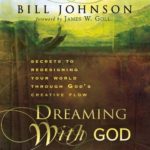
Dreaming With God Book Review

Dreaming With God a book review by John Carmichael.


Bibliography

Johnson, Bill. Dreaming With God. Shippensburg. PA: Destiny Image Publishers, Inc., 2006.

Content

Johnson’s book presents the truth that humanity can and should partner with God to experience a change in our world. He does this in ten chapters, with each of the chapters presenting the application and scope of this truth. This review will not spend a lot of time detailing each of the chapters, but it will with chapter one. In chapter one, Co-laboring With God, Johnson seeks to establish a new kind of relationship with God. That would be a relationship as a partner or friend (24). He draws on John 15:15, where Jesus calls His disciples friends. This change in the relationship affects four areas of our life: what we know, our experience, our function, and our identity (25). He brushes by the topic of God’s sovereignty with the quote of Jack Taylor, “God is so secure in His sovereignty that He is not afraid to appear un-sovereign” (30).

The subsequent chapters seek to continue to underscore the point of the first chapter with varying nuances. Chapter two challenges the reader to be creative. Johnson pushes back on the prayer, “none of me, all of You” (37). The point is that God wants the believer to recognize and activate the gifts He has already placed in the believer. The third chapter is called The Value of Mystery. Here Johnson deals with various aspects of God that humanity cannot figure out, like the tension of “the Kingdom now, but not yet” paradigm (64). Chapter four is called The Language of the Spirit. This chapter identifies many ways God will speak to believers, including dreams, prophecy, and senses. He says, “Having the heart and ability to hear from God leaves us with an unlimited potential in resourcing earth with Heaven’s resources” (85). In chapter five, Invading Babylon, the reader is exposed to the scope of the world that needs to be redesigned. He lists the seven mind-molders of society (92). In chapter six, The Practical Side of Things, Johnson seeks to tear down the compartmentalization that exists when it comes to God’s priorities and ours. The point is summed in his declaration, “If it matters to you, it matters to God (111).” Chapter seven, The Spirit of Revelation, moves the reader to understand that a redesign of the world is impossible without learning to receive from the Spirit. In this chapter, there is a discussion on the focus on the Spirit and the Scriptures. He gives a list of suggestions for those wanting to grow in receiving revelation from God (132-133). Chapter eight, Celebrating the Living Word, is a continuation of chapter seven. This chapter challenges the reader to listen to the Holy Spirit, meditate on the scriptures, and “to shape our world through biblical declarations” (154). Chapter nine, Redesigning Our World, sums up the previous chapters and gives various applications of the precepts he presents. The final chapter, Pulling Tomorrow Into Today, is a challenge to the reader to use the concepts in the book with an eye on the future.

Evaluation

Johnson’s book, Dreaming With God, is not just a good read; it is a provoking challenge to believers to become a force to change the world with God. The reader will be hard-pressed just to read this book. It is a book that presents concepts and truths that are intended to be carried out. This book will not fill your head with information and theology. It will challenge the reader to expand their thinking and start putting the truths to work in their lives.

From a literary perspective, this book is true to Johnson’s nature. It flows like a fluid. It is not a structured book. There will be times that the reader is reading some excellent ideas but have a hard time connecting them to the point of the chapter or the book, for that matter. This is not to say that every concept and precept are disconnected from each other or from the book’s point; it just needs to be understood that Johnson does not make the connection for the reader.

Johnson believes in the continuance of the supernatural and of the gifts of the Spirit. The reader will need to understand that Johnson presumes the fact that God is still speaking and that the gifts of the Spirit are available for believers today. Johnson will challenge the reader to seek after things in the Spirit realm that are hardly talked about in mainline denominational churches. This book is not for the carnal Christian or the pragmatically focused Christian. Johnson marries the spiritual Christian to the practical Christian. The point is that the believer will need to be spiritually sensitive with the motive to activate and experience in the world what has been perceived in the Spirit.

This book will be a challenge to people who are suspicious of teachings on the supernatural. For instance, Johnson says, “The devil himself has not creative abilities whatsoever. All he can do is distort and deform what God has made” (43). One critic seizes upon that statement by calling it a “critical error” (https://discover.hubpages.com/literature/Dreaming-with-God-Bill-Johnson-book-review). The critic then lists several of the activities of the devil as listed in the Bible. This list is supposed to prove that Johnson, and all who believe in the current flow of the power of the Spirit, are “dangerous and wrong.” Johnson’s point is to describe that anything that Satan does is just a copy. He is not trying to say that Satan does not have power or abilities. The question that some have asked is, “where did Satan get his power?” While not wanting to open this theological “can of worms,” in short, that answer is from God. Satan is operating on residual power from God that he had when he was in heaven.

This is not a book of systematic theology. That is not a slam on the book. I do not believe Johnson intended to make this his theological thesis on every one of the precepts presented. For instance, there will not a comprehensive theological/historical/cultural discussion on the sovereignty of God in the book. What the reader will get is a summation of Johnson’s thoughts about the subject. His point is not to answer every question but to give the reader a mission to explore these concepts and then to activate what is revealed. Do not try to use this book as a resource to establish theological truths for you. I would compare this book to a prescription you get from a medical doctor, not a dissertation you would get from Ph.D. in medicine.

Readers need to understand the general concepts in this book are intended to challenge the reader to seek to experience God’s best. It will grow the reader’s perspective that God wants to redesign their world with them. New believers and seasoned saints would benefit from this book.

Posted on Leave a comment

Binding and Loosening Rediscovered

Binding & Loosing – rediscovering an important aspect of walking in Victory. 

“I will give you the keys of the kingdom of heaven, and whatever you bind on earth shall have been bound in heaven, and whatever you loose on earth shall have been loosed in heaven.” Matthew 16:19 NASB“Truly I say to you, whatever you bind on earth shall have been bound in heaven, and whatever you loose on earth shall have been loosed in heaven.” Matthew 18:18 NASB

What is “Binding & Loosing”?
The Encyclopaedia Biblica (public domain) says, “Binding and loosing is originally a Jewish phrase appearing in the New Testament, as well as in the Targum. In usage, to bind and to loose means to forbid by an indisputable authority and to permit by an indisputable authority.”

One result of the death, burial, and resurrection of Jesus Christ is the authority given to Christians. It is often called the “authority of the believer.” Simply put, when a person (any person) receives Jesus as Lord of their lives, they carry authority. This authority comes from God. It is born out of a person’s submission to Jesus Christ.

What good is the authority if you do not use it?
An illustration is important at this point. Say that a police officer sees a problem with a stoplight of an intersection. Chaos is resulting because the traffic light is broken. The police officer has the authority to do something. People would be justifiably upset with the officer if no action is taken.

Why are the people justified in being upset with the officer? The answer is because the officer is not using the delegated authority to help the situation. The authority is only useful if it is invoked.

When we bind and loose, we are releasing heaven upon the earth.
We release God’s Will (not ours) upon the earth. When we see anything that is not aligned with God’s Will on the earth, we are to “take authority” over it in the name of Jesus Christ. This would include sin, sickness, and satan (I purposely do not capitalize his name).

Here is a link to a scholarly article by Dr. Paul King that gives a history and theological foundation for this fundamental doctrine. I encourage you to read it. 

Are you ready to bind and loose?
Include “binding and loosing” in your prayer time. Even as you go throughout your day, bind sin, sickness, and satan in the name of Jesus Christ. Also, loose righteousness, healing, and angels upon the earth.

Let’s bring heaven to the earth.

Posted on Leave a comment

Authority to Heal Book Review

Bibliography

Blue, Ken. Authority to Heal. Downers Grove, Ill: InterVarsity Press, 1987.

Author Information

Dr. Ken Blue is the founder of Good News to the Poor, an organization that seeks to take the grace message and charismatic ministry to “the poor” in social-economic and spiritually poor places worldwide. He served as a missionary to Communist East Europe, where he was imprisoned, presumably for preaching the Gospel. He and his wife have started churches in Canada and the U.S. He does consulting work for businesses using Biblical principles of leadership. He also was a five-time All-American swimmer and selected to be part of the 1968 U.S. Olympic Training Team.

Blue earned a Doctorate of Ministry in Theology from Fuller Theological Seminary, a Masters degree in Christian Studies at Regent College, and a B.A. in Communications from Cal State Hayward. He has authored and co-authored others books, including Healing the Wounded and Healing Spiritual Abuse. Additionally, he developed training courses for businesses.

Content Summary

Authority to Heal seeks to provide answers to questions concerning divine healing and establish a Biblical model for ministering to the sick. The book is divided into three sections (1) Clearing the Ground of Theological Hindrances, (2) The Kingdom of God and the Fight to Heal, and (3) Beginning a Healing Ministry. Each of the three sections has distinct purposes.

The first section, “Clearing the Ground of Theological Hindrances,” seeks to remove the “weeds before planting the seeds.” By this, Blue addresses errors that hinder the divine healing ministry. There are four particular “weeds” Blue addresses. The first is “sanctification through sickness,” which believes that sickness increases sanctification in a person. The second is “Divine Determinism,” the belief that God causes all things, including sickness. The third is the “Faith Formula,” which says that faith is a strict causality of all healing and can be used as a technique to manipulate the power of God. The fourth is “The Secular World View,” which deals with the secular worldview that denies the supernatural, miraculous healing.

The second section, “The Kingdom of God and the Fight to Heal,” presents the theological foundation for divine healing. Blue establishes five significant issues surrounding the doctrine of divine healing. The first issue examined that supports divine healing is that God loves people and desires to heal their sickness in all areas, spiritual, psychological, and physical. The second issue for divine healing is that healing is a manifestation of the Kingdom of God overcoming the kingdom of Satan. The third issue concerning divine healing is that it is a fight and must be viewed as such. The fourth issue of divine healing is the importance of faith, not as the only cause-and-effect of divine healing. Still, that faith is significant and even determinative in some of the Gospel narratives. The fifth issue of divine healing is that Christians can expect to receive manifestations in the present and the future. He uses the “now and not yet” terminology.

The third section of the book, “Beginning a Healing Ministry,” establishes a Biblical model for ministering to the sick. Blue gives four considerations when beginning a healing ministry. The first consideration is understanding many models are effective when ministering to the sick. He next presents five steps in his ministry model. These steps are (1) interviewing, (2) choosing a prayer strategy, (3) praying for specific results, (4) assessing the results, and (5) giving post prayer direction. The next consideration in developing a healing ministry is to address the whole person: spirit, soul, and body (I Thess. 5:23). Finally, he presents the notion that Christians must obey the command to heal the sick and walk in authority.

Evaluation

The uniqueness of this book is its presupposition that God intervenes on behalf of sick people with healing. Yet, this presumption is not in the vein of many contemporary “word of faith” preachers. Blue even allows for mystery and a “now and not yet” version of attainment of healing.

Blue tackles the issue of the sovereignty of God with an outstanding balance in his use of the Bible and logic. He brings out some crucial points of the pastoral problems with the teaching that everything that happens, including sickness and death, is de facto God’s direct activity. He reveals that many situations are not a result of God’s Will but man’s choices. He even points to scriptures from Apostles Paul and Peter that indicate God’s Will for all to be saved, yet most will not (1 Tim. 2:4 and 2 Peter 3:9 respectively). Yet, he does not in any way take away from the fact that God is sovereign. The book does not glibly approach the subject with simple answers to difficult situations. Blue even points out that God’s sovereignty does not cause sickness, but He does work within sickness.

Blue bravely tackles the sticky issue of faith when it comes to being healed of sickness. He cleverly calls out particular faith preachers within his discussions of faith without actually mentioning their names but does give titles of their messages. This reviewer laughed when one particular title was mentioned associated with a particular hero of the faith. Yet in Blue’s correction, he does give the most “faith preachers” the designation of being closer to the truth than others. While he says that a “faith formula” is not appropriate, he emphatically teaches that faith is vital when receiving healing. As stated before, Blue says that the Gospel narratives even point out that faith is often determinative.

Blue effectively points out that although healing is God’s Will, it is also part of a fight. He says that this fight results from God sovereignly giving freedom of choice and therefore allowing for its consequences. Man’s freedom resulted in sin, which allowed for sickness. So God works within the framework He set up to undo the results of sin. As it relates to healing, Jesus’ death and resurrection defeated Satan. The book makes a point that the crucifixion determined the result, but the war still continues.  This is compared to human wars where the fighting continued after the result had been resolved, as in D-day. Although Satan is stripped of his authority, temporarily, he still has an ability that will be stripped from him at the end of this age.

This book lays out the theological issue of obedience concerning the healing ministry. Very few Christians would look at the healing ministry as a point of obeying God. Blue poignantly presents the reality that many churches believe in healing yet do not practice a healing ministry. He tells a moving story of a young single mother who prays for the sick as a response to what Jesus Christ has done in her life.

A strength of the book is its commitment to giving more weight to Scriptural truths than to personal experiences. “When we want to understand God’s will, we should not try to deduce it from the circumstances of a fallen world. Neither should we form an abstract concept of God’s will from a non-biblical notion of divine sovereignty. Rather, we should look at Jesus, who is the explicit declaration of God’s will.” (Ken Blue. Authority to Heal (Kindle Locations 308-310). Another strength is Blue’s ability to point out the mystery surrounding healing. No one has all the answers, and no guilt should be put upon a person who deals with sickness. Arguably the greatest strength of the book is the five-step model of a healing ministry. Blue gives a willing participant the framework to begin a healing ministry.

The only weakness this reviewer sees is that there could be a more emphatic presentation of the alternative positions of his presuppositions. Calvinists are sure to have emphatic rebuttals. Blue’s bias is unashamedly presented. It does also seem that some of the points are underdeveloped.

Authority to Heal should be required reading for all who want to participate in the healing ministry. This book teaches a proper and balanced doctrine on the theology and practice of divine healing. More books need to approach the subject of divine healing like this one. Dr. Blue’s book presents divine healing as an effective evangelism tool that can be used to reach a spiritually hurting world.