Posted on Leave a comment

When God’s Plan Doesn’t Make Sense


Have you ever looked at your life and thought, This doesn’t make sense? Maybe things aren’t going the way you expected, or you’re wondering why God seems to be taking you in a direction you didn’t plan.

Sometimes, we expect God’s plan to be clear and straightforward, but that’s not always the case. The good news? We don’t have to figure everything out. God sees the bigger picture, and we’re part of His story—not just our own. Here are four things to remember when life feels confusing.

1. God Knows What He’s Doing

It’s easy to assume we should understand everything happening in our lives. But God’s ways are much higher than ours. Isaiah 55:8-9 says:

“For my thoughts are not your thoughts,

neither are your ways my ways,” declares the Lord.

“As the heavens are higher than the earth,

so are my ways higher than your ways

and my thoughts than your thoughts.”

Simply put: God’s perspective is much bigger than ours. What feels like a setback or a detour might actually be part of His perfect plan.

2. Trust That God is Good

When life is uncertain, we have two choices—stress about what we don’t know or trust in who God is. Psalm 131:2 gives us a picture of calm trust:

“But I have calmed and quieted myself,

I am like a weaned child with its mother;

like a weaned child I am content.”

A child rests in their parent’s care because they know they’re safe. In the same way, we can choose to rest in God’s goodness, even when we don’t have all the answers.

3. God is Always Working

Even when we don’t see it, God is working things out for good. Romans 8:28 reminds us:

“And we know that in all things God works for the good of those who love him, who have been called according to his purpose.”

Joseph’s story in Genesis 50:20 is a perfect example. He went through betrayal, slavery, and prison, but later told his brothers:

“As for you, you meant evil against me, but God meant it for good.”

What seemed like a disaster was actually part of God’s bigger plan. The same is true for us.

4. Keep Going—Don’t Give Up

When life is tough, it’s tempting to stop believing, stop praying, or stop trying. But the Bible encourages us to keep going. Psalm 126:5-6 says:

“Those who sow in tears shall reap with shouts of joy!”

Even when we don’t see immediate results, every small act of faithfulness matters. Keep planting seeds—keep trusting, keep praying, keep moving forward. God is working behind the scenes.

Final Thoughts

Life won’t always make sense, but that’s okay. We don’t have to understand everything to trust that God does and that He has our best interests in mind. His plan is bigger than ours, and He’s guiding us even when the path isn’t clear.

So, when you’re feeling uncertain, remember: God is in control, He is good, and He is working for your good. Keep trusting, and keep going—you’re not alone in this!

Posted on Leave a comment

Enlarging Our Capacity to Receive God’s Blessings

Have you ever considered that God has blessings prepared for you—gifts, opportunities, and breakthroughs—that you may never receive? That might be a shocking thought. It may even feel discouraging. But what if the issue isn’t that God is withholding something from you, but that your capacity to receive isn’t large enough? The truth is, God desires to pour out His goodness in our lives, but we must be prepared to receive it.

Prepare for What’s Coming

In Isaiah 54, God speaks to people who are discouraged and feel like they lack what they need. Instead of telling them to wait passively, He instructs them to prepare for His blessings:

“Enlarge the place of your tent, stretch your tent curtains wide, do not hold back; lengthen your cords, strengthen your stakes. For you will spread out to the right and to the left; your descendants will dispossess nations and settle in their desolate cities.” — Isaiah 54:2-3 (NIV)

This passage is a powerful reminder that when we go through difficult seasons, we often shrink our expectations. Disappointment, shame, and fear of the future can limit our vision. In ancient Israel, barrenness was considered a disgrace, leaving a person without hope of legacy or inheritance. But God spoke to His people in the midst of their discouragement and told them to expand—to prepare for growth before they even saw the results.

Gideon had a similar experience. He was hiding in a winepress, trying to protect a small harvest from being stolen, when God called him a “mighty warrior” (Judges 6:11-12). Gideon saw himself as weak, but God saw what he could become. God is never limited by our circumstances—He wants to bless us beyond what we think is possible!

Faith Determines Capacity

God’s Word makes it clear that He has good plans for us:

“‘For I know the plans I have for you,’ declares the Lord, ‘plans to prosper you and not to harm you, plans to give you hope and a future.’” — Jeremiah 29:11

“Every good and perfect gift is from above, coming down from the Father of the heavenly lights.” — James 1:17

However, while God is always willing to bless, our faith determines our capacity to receive. The Israelites who scouted the Promised Land had a choice: believe in God’s ability to bring them victory or focus on the obstacles. Ten spies saw giants and declared defeat, while Caleb, who had a different spirit, believed in God’s promise (Numbers 13:1-3, 25-28). Later, the New Testament confirms that their unbelief limited what God could do for them (Hebrews 3:9).

Growing Our Faith to Receive More

If we want to increase our capacity to receive, we must grow our faith! Consider the example of the centurion who came to Jesus for healing:

“Then Jesus said to the centurion, ‘Go! Let it be done just as you believed it would.’” — Matthew 8:13

Our faith determines the measure of what we receive. The Bible tells us that faith comes and grows by hearing the Word of God:

“Faith comes by hearing, and hearing by the Word of God.” — Romans 10:17

One of the most practical ways to grow in faith is through intentional meditation on Scripture:

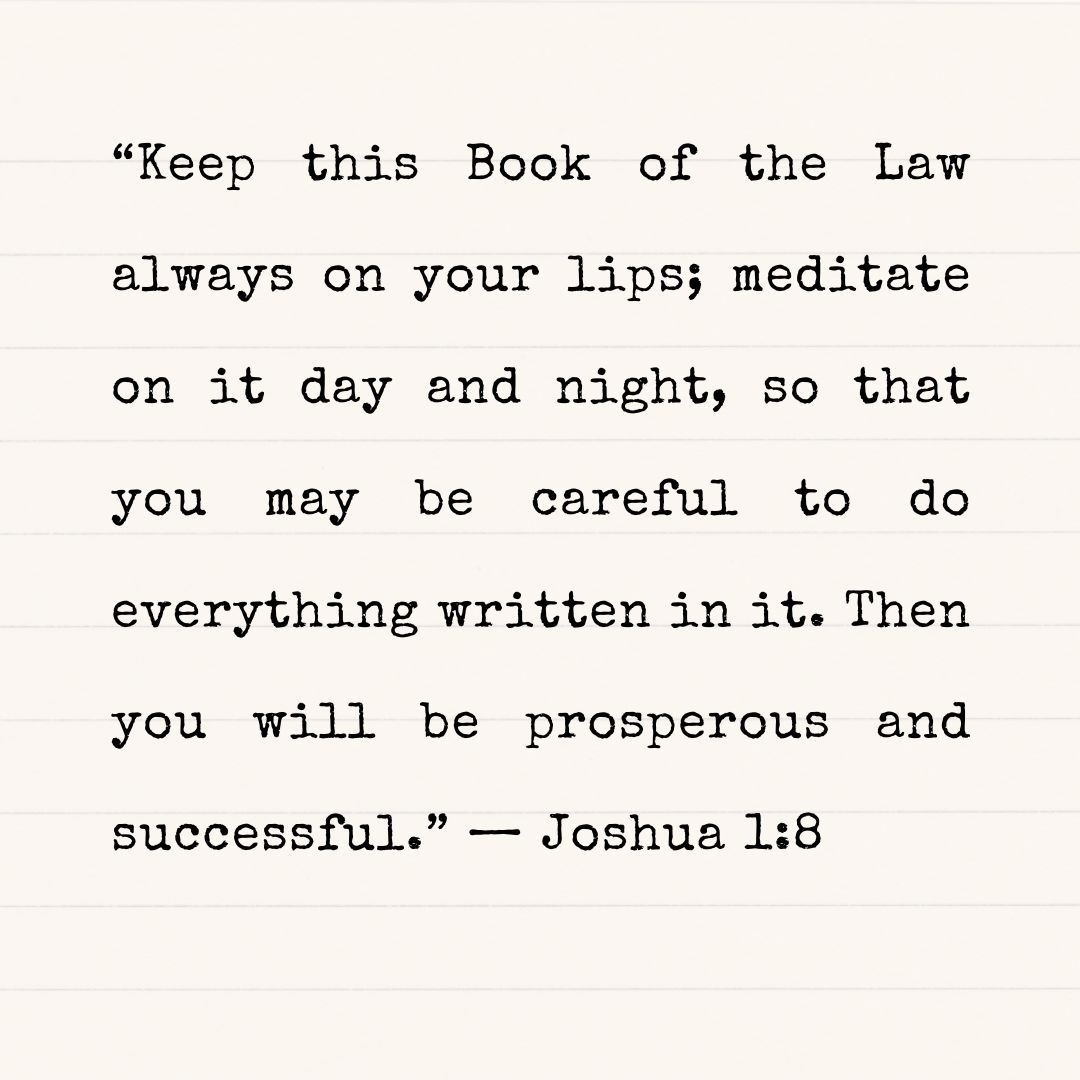
“Keep this Book of the Law always on your lips; meditate on it day and night, so that you may be careful to do everything written in it. Then you will be prosperous and successful.” — Joshua 1:8

Taking Action

So how do we apply this in our lives? We build our faith by studying, praying, and speaking Scriptures relevant to our situation. When we fill our hearts and minds with God’s Word, we expand our capacity to receive what He wants to give us.

This week, let’s take intentional steps to do just that. Find scriptures that speak to your needs, meditate on them, and declare them in faith. God is ready to bless you—are you prepared to receive?

Posted on Leave a comment

You Matter!

You’ve Been Chosen—Now What?

Have you ever stopped to consider that you are here for a reason? Not by accident. Not as an afterthought. But because God chose you. That’s not just a nice sentiment—it’s a biblical truth.

Ephesians 1:4 tells us that before the foundation of the world, God had you in mind. You were handpicked for something greater than yourself. It’s easy to forget this when life feels routine or overwhelming, but understanding your purpose changes everything.

Chosen for a Purpose

Being chosen isn’t just about belonging; it’s about mission. In John 15:15-16, Jesus calls us friends, not just servants. That means He wants to share His heart with you, to walk with you in a deep, personal relationship. But more than that—He has work for you to do. He has equipped you for something only you can accomplish.

Your Identity in Christ

So often, we look to the world to define us—by our jobs, achievements, or the approval of others. But scripture tells a different story. 1 Peter 2:9-10 reminds us that we are chosen, set apart, and recipients of God’s mercy. Your identity isn’t wrapped up in what you do but in who you are—a reflection of God’s goodness to the world.

You Have Gifts—Use Them

Maybe you’ve wondered what you bring to the table. Maybe you feel like everyone else is more talented or more useful in God’s plan. But here’s the truth: there are no giftless people in God’s kingdom. 1 Peter 4:10-11 and 1 Corinthians 12:4-10 emphasize that every believer has at least one spiritual gift, and each is essential. You were given something specific to contribute, and when you use it, you glorify God and strengthen His body—the church.

You Are Needed

Think of a body. If one part isn’t functioning, the whole system suffers. The same is true in the body of Christ. Ephesians 4:16 and 1 Peter 4:11 make it clear: when each person plays their role, the entire body thrives. Your presence, your participation, and your gifts matter.

You Will Give an Account

The truth is, how we use our gifts isn’t just a suggestion—it’s a responsibility. Jesus tells the parable of the talents in Matthew 25:14-30, showing that those who faithfully use what they’ve been given will receive more, while those who hide their gifts out of fear or apathy will miss out. It’s a sobering reminder: what you do with your calling matters.

The Promise of Reward

This journey isn’t just about accountability—it’s about promise. Ephesians 4:30 assures us that we will be saved on the day of redemption. And God is just—He rewards each according to their faithfulness (Ephesians 6:8, Galatians 6:7-9). Every act of obedience, every step in faith, and every use of your gifts counts.

Step Into Your Calling

So, what does this mean for you? It means you are seen. You are chosen. You are needed. If you’ve ever doubted your worth or purpose, let this be a reminder: you are part of something far bigger than yourself. Step forward in faith; knowing the God who called you will equip you. Your gifts have a purpose—use them well.

Blessings,

Erin

Posted on Leave a comment

The Power of Prayer – Intercession

Understanding the Role of Intercession

Every person has things in their life that they care deeply about—family, friends, church, community, and even government. When these aspects of our lives are not as they should be, we long for change. Fortunately, as believers, we have a powerful tool to bring about transformation—intercession.

What Does the Bible Teach About Intercession?

Intercession is a vital component of a believer’s prayer life. The Bible distinguishes between different types of prayer:

  • Supplication – Simply asking God for something.
  • Prayer – A broad term encompassing all communication with God.
  • Giving of Thanks – Expressing gratitude and praise to God.
  • Intercession – Standing in the gap for others, bringing their needs before God.

Intercession is not just encouraged but commanded in Scripture and modeled by many biblical figures.

Biblical Examples of Intercession

Old Testament Examples

  • Abraham interceded for Lot and his family (Genesis 18:22-23).
  • Moses pleaded with God not to destroy Israel. His prayer brought mercy to the people so that the children and young adults could enter the promised land despite the evil choices of their elders. (Numbers 14:5-6, 20).
  • Samuel interceded for Israel after they repented from idolatry, leading to God’s intervention against the Philistines (1 Samuel 7:5).
  • Prophets like Amos, Ezekiel, and Elijah also stood as intercessors for the people.

New Testament Examples

  • Paul prayed for:
    • The salvation of Israel (Romans 10:1).
    • A spirit of unity within the church (Romans 15:5-6).
    • Believers to know God and understand their spiritual inheritance (Ephesians 1:15-23).
  • Stephen interceded for his enemies as they stoned him (Acts 7:59-60).
  • Jesus continually intercedes for us at the right hand of God (Romans 8:34). He also prayed for Peter that his faith would not fail (Luke 22:31-32).

How Does This Apply to Us Today?

The Call to Intercede

God commands us to intercede. He is actively looking for those willing to stand in the gap and pray for the needs of others:

  • Ezekiel 22:30 – God searches for someone to intercede on behalf of the land.
  • Ezekiel 33:6 – We will be held accountable for failing to intercede when we see danger coming.

Intercession strengthens Christian fellowship and is an antidote for selfishness. As Dietrich Bonhoeffer wrote:

“A Christian fellowship lives and exists by the intercession of its members for one another, or it collapses. I can no longer condemn or hate a brother for whom I pray, no matter how much trouble he causes me. His face, that hitherto may have been strange and intolerable to me, is transformed in intercession into the countenance of a brother for whom Christ died, the face of a forgiven sinner.”

The urgency of intercession is also emphasized by Leonard Ravenhill:

“If we had more sleepless nights in prayer, there would be fewer souls to have a sleepless eternal night in hell.”

Taking Action

Intercession is a powerful force for change. We must pray for our families, church, community, and world as believers. By intentionally committing to intercession, we align ourselves with God’s heart and become instruments of His will.

For more information on prayer and intercession, the following books are excellent resources (please note I receive a small commission for books purchased through this blog):

How to Labor in Prayer for Breakthrough 

Prayers That Availeth Much

The Intercessors Handbook: How to Pray with Boldness, Authority, and Supernatural Power

Intercessory Prayer: How Can Can Use Your Prayers to Move Heaven and Earth


Will you take up the call to intercede today? What specific areas are you asking God to intervene in?

I would love to hear your comments and pray in agreement with you!


Blessings,

Erin


Posted on Leave a comment

The Power of Repentance – A Deep Dive into Psalm 51

The Power of Repentance: Lessons from Psalm 51

Repentance is a key part of the Christian faith—it’s how we make things right with God when we mess up. One of the best examples of true repentance in the Bible is found in Psalm 51, a heartfelt prayer from King David after he committed some serious sins, including adultery and murder. This psalm isn’t just a cry for help; it’s a powerful guide on how to seek forgiveness and find spiritual renewal.

The Story Behind Psalm 51

Psalm 51 was written by King David after he was confronted by the prophet Nathan about his sins. Instead of making excuses, David poured out his heart in this psalm, asking God for mercy and cleansing. This raw and honest prayer shows us that even great leaders can fail, but God’s forgiveness is always available.

What Makes Psalm 51 Special?

This psalm is a song of lament, which means it’s an expression of deep sorrow. David’s words follow a pattern often seen in prayers of repentance: he calls out to God, admits his wrongdoings, asks for forgiveness and promises to live differently.

David’s Big Mistake

David’s sins are recorded in 2 Samuel 11-12. Instead of going to battle with his army, he stayed behind, saw a beautiful woman named Bathsheba, and had sex with her. When she became pregnant, he tried to cover it up, and when that didn’t work, he arranged for her husband to be killed. God sent the prophet Nathan to call David out, and instead of denying it, David admitted his guilt and turned to God for forgiveness.

Powerful Themes in Psalm 51

Psalm 51 teaches us important lessons about repentance and God’s mercy. Here are a few key takeaways:

  1. Admitting Our Wrongs – David doesn’t try to justify what he did. He simply says, “I know my transgressions and my sin is always before me” (Psalm 51:3). We can’t move forward unless we first acknowledge where we went wrong.
  2. Asking for God’s Forgiveness – David knows that only God can truly cleanse him: “Wash me, and I shall be whiter than snow” (Psalm 51:7). This shows that forgiveness isn’t about making excuses but asking God to purify our hearts.
  3. Transformation and Renewal – David doesn’t just want to be forgiven; he wants a fresh start: “Create in me a clean heart, O God, and renew a steadfast spirit within me” (Psalm 51:10). True repentance means not just feeling sorry but allowing God to change us.

Applying Psalm 51 to Our Lives

Psalm 51 isn’t just an ancient prayer—it’s a practical guide for us today. Here’s how we can use it in our daily lives:

  1. Be Honest About Our Mistakes – True repentance means admitting mistakes without shifting blame or making excuses.
  2. Trust in God’s Mercy – No matter how big our mistakes are, God is always ready to forgive us when we come to Him with a sincere heart.
  3. Allow God to Change Us – Repentance isn’t just about saying sorry; it’s about letting God shape us into better people who make better choices.
  4. Use Our Stories to Help Others – After repenting, David says he wants to help others turn back to God (Psalm 51:13). Our experiences—both good and bad—can be used to encourage others.

Final Thoughts

Psalm 51 is one of the most powerful examples of repentance in the Bible. It reminds us that everyone makes mistakes, but God’s grace is greater than our failures. If we turn to Him with sincere hearts, He is always willing to forgive, cleanse, and restore us.